The most common question parents ask on a tour, after the obvious ones about hours and tuition, is some version of: "What does my kid actually do all day?" The homepage day section gives the quick view. This is the long version — every block, what's happening inside it, why we structure it the way we do, and what the child is developing while it unfolds.
We run three age groups: infants (six weeks through eighteen months), toddlers (roughly eighteen months through three years), and preschool (three through six). The rhythm is different for each. We'll walk through the preschool day in detail and note how it shifts for younger children.
7:00 AM — Welcome and breakfast
What's happening. Children arrive, hang up their belongings, sit at low tables for breakfast. Drop-off is staggered, calm, and quiet. Teachers greet each child by name at eye level.
The intention. A predictable, warm start. We want every child to walk in and know the next ten minutes — coat on the hook, hands washed, breakfast at the same table. Familiar sequence is calming for a developing nervous system.
Why it matters. Routine supports executive function. Knowing what comes next frees the mind to engage with what is right now. For infants, the welcome is even slower — an unhurried RIE-paced handoff at the door, no rushed goodbyes.
8:30 AM — Outside time / sensory play / floor time
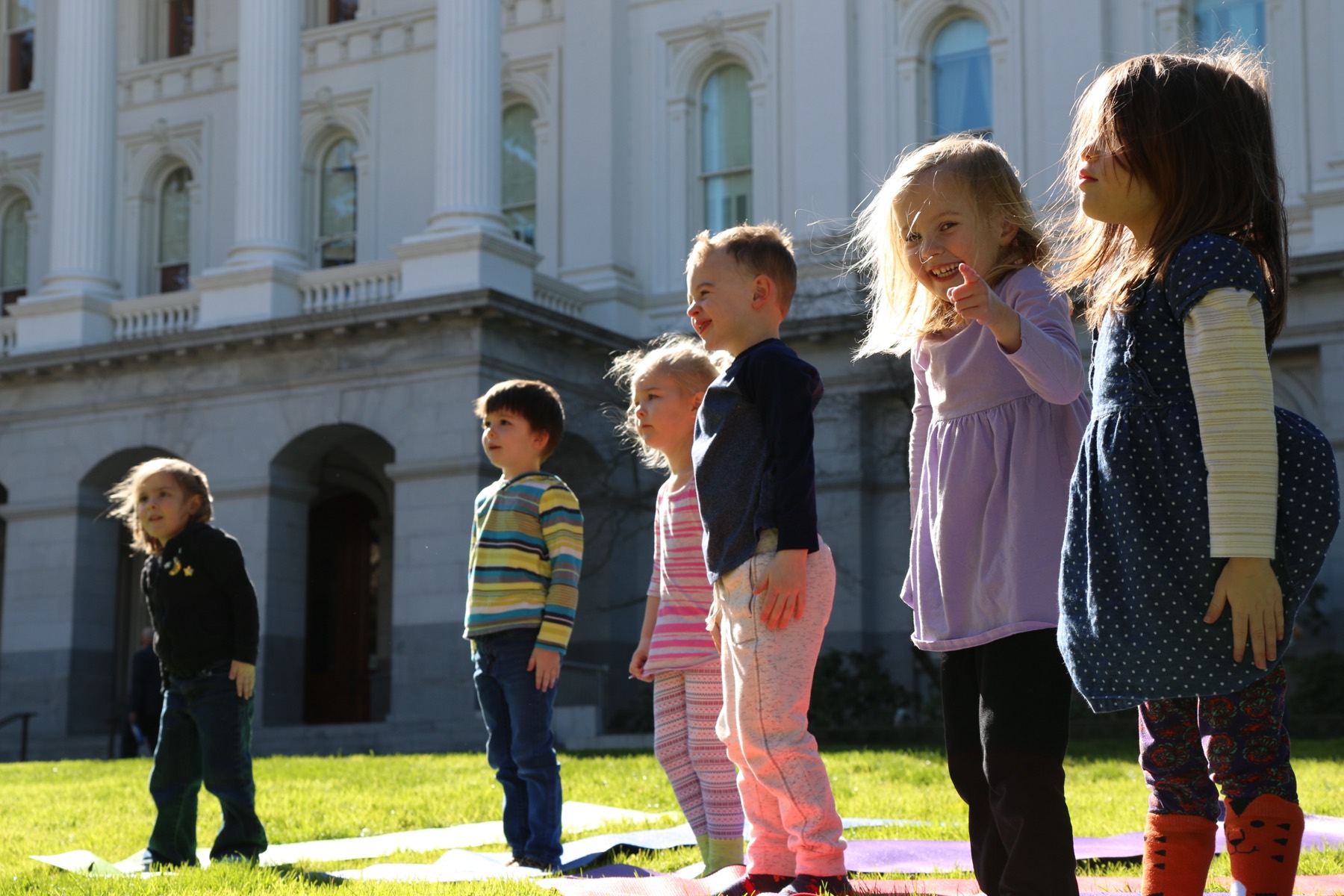
What's happening. For preschool, open outdoor play before the structured day begins. For toddlers, exploratory sensory play — water, sand, dough, fabric. For infants, free movement on mats, observed by caregivers who narrate quietly.
The intention. Get bodies moving and sensory systems regulated before anything that requires sustained attention.
Why it matters. Outdoor movement before sit-down learning improves focus, mood, and cognitive performance throughout the morning. For infants, floor freedom builds the gross motor foundation for crawling and walking and develops the agency to choose what to look at and reach for.
9:00 AM — Morning circle / music & movement
What's happening. Preschoolers gather to sing, share, breathe together, and set a daily theme. Toddlers do songs, instruments, dancing, and stretching.
The intention. Build classroom community and practice mindfulness. The morning theme — Mindful Monday, Transformation Tuesday — gives the day a center of gravity.
Why it matters. Daily mindfulness practice builds the prefrontal cortex muscles that support attention, impulse control, and empathy. For toddlers, music activates language and emotional centers simultaneously while dance builds coordination and proprioception.
9:30 AM — Small-group activity / outdoor walk
What's happening. Preschoolers rotate through small-group lessons in literacy, math, art, or science based on developmental level. Toddlers take a short walk around the block in walking ropes or hand-in-hand pairs. Infants get outdoor air in strollers or carriers, with grass time when weather allows.
The intention. For preschoolers, targeted instruction in small groups for kindergarten readiness. For toddlers, movement and fresh air before the mid-morning energy spike.
Why it matters. Small-group work allows differentiation — children learn at the edge of their ability without being lost or bored. Toddlers especially need to move every 30 to 45 minutes; outdoor time prevents the over-stimulation that fuels meltdowns.
10:00 AM — Snack
What's happening. Organic, additive-free, nut-free snack at low tables, served family-style.
The intention. Refuel between cognitive sessions without disrupting the meal-window structure.
Why it matters. Stable blood sugar supports stable mood and focus during the most cognitively demanding part of the day. Predictable food times also reduce hunger-triggered tantrums in toddlers.
10:15 AM — Choice-based play (the atelier hour)
What's happening. Preschoolers choose where to spend the next hour — building, art, dramatic play, light table, books. Toddlers alternate between story time and free room exploration. Infants engage in self-directed floor exploration with open-ended materials.
The intention. This is where Reggio-inspired emergent curriculum lives. Children's choices today reveal what tomorrow's project should be.
Why it matters. Choice-based play is the longest, deepest learning block of the day. Self-directed exploration builds focus, persistence, intrinsic motivation, and the early research habits that carry into all later schooling.
11:30 AM — Group circle and clean-up
What's happening. A short reflection on the morning. Materials are cleaned up together as a community.
The intention. Practice metacognition (thinking about your own thinking) and shared responsibility.
Why it matters. Reflecting on what they did builds self-awareness, a key kindergarten readiness skill. Cleaning together — not as punishment, but as care for shared space — builds community membership.
12:00 PM — Lunch (family-style)
What's happening. Lunch (brought from home) at low tables with peers and teachers, served family-style. Conversation is encouraged, not policed.
The intention. Eat together, practice conversation, try new foods.
Why it matters. Mealtime conversation is one of the strongest predictors of vocabulary growth in early childhood — stronger, in some studies, than reading aloud. Toddlers especially benefit from family-style meals because they practice serving themselves and asking for what they need.
12:30 PM — Nap (or quiet activities)
What's happening. Cots in a darkened room with quiet music for nappers. Books and quiet activities for non-nappers. Infants sleep on their own schedule throughout the day.
The intention. Restoration in whatever form each child needs.
Why it matters. Even non-napping children need a midday rest. Forced sleep or forced wakefulness both miss the developmental need. Sleep is when children consolidate the morning's learning, and we do not sacrifice it for adult convenience.
2:30 PM — Outdoor time
What's happening. Playground, gardens, structured games for preschool. Big-body play for toddlers. A second outdoor exposure for infants.
The intention. Afternoon movement that anchors the second half of the day.
Why it matters. Afternoon outdoor time supports the night's sleep regulation and prevents late-afternoon stress hormones from spiking. Daylight at this hour is one of the most reliable inputs for circadian rhythm.
3:00 PM — Snack
What's happening. Second organic, additive-free snack of the day.
The intention. Refuel for the afternoon stretch, when energy and focus often dip.
Why it matters. Children whose blood sugar is stable in the late afternoon have easier evenings at home with parents. This is one of the most under-discussed predictors of a peaceful 6 PM.
3:15 PM — Free play and closing
What's happening. Self-directed play, quiet crafts, books. Children prepare for pickup.
The intention. Calm, child-directed wind-down. We are not trying to cram one more lesson in before parents arrive.
Why it matters. How the school day ends shapes the family evening. We send children home regulated, not depleted.
5:00 PM — Pickup window
What's happening. Calm goodbyes, often with a brief teacher-to-parent handoff about the day. Brightwheel app updates have already been sent.
The intention. A soft landing into the home transition.
Why it matters. How the day ends shapes how the next one begins. Calm goodbyes set up calm hellos. We close at 6:00 PM.
What we believe at Growing Mindfully
You'll notice what isn't on this schedule. There are no flashcards. No drilled academics. No screen time. No rushed transitions. The day is full but unhurried, structured but flexible enough to let an emergent project breathe.
The rhythm is shaped by three commitments. Present — every block has a developmental purpose, and we don't pad. Playful — open-ended, choice-based time is sacred and protected. Rooted — the routine itself is the security blanket; children know what comes next, and that knowing frees their minds.
For the interactive view of every block — including infant and toddler variations — visit the day section on the homepage.